
Best Flooring for DFW Homes: LVP, Hardwood, Tile & Carpet Compared
By Dillon Hubbard, OnPoint Pros · July 2, 2026 · Updated October 1, 2026
There's no single “best” floor: there's the best floor for each room, budget, and household. Here's how we help DFW homeowners choose, and why the North Texas climate should drive the decision.
For most DFW homes, waterproof luxury vinyl plank (LVP) is the best all-round floor at $3–$7 per square foot installed: it handles clay-soil slab movement, spills, and pets better than hardwood. Use porcelain tile ($5–$10/sq ft) in bathrooms and laundry, carpet ($2–$5/sq ft) in bedrooms, and hardwood ($6–$12/sq ft) in formal spaces where resale value matters most.
Start With How the Room Is Used
Busy living areas, entries, kitchens: waterproof luxury vinyl plank (LVP) is the DFW default. It shrugs off spills, pets, and foot traffic and looks like wood.
Wet areas (bathrooms, laundry): porcelain or ceramic tile is still the gold standard for durability and water resistance.
Bedrooms and stairs: carpet is warm, quiet, and budget-friendly where water isn't a concern.
Formal spaces: engineered or solid hardwood brings warmth and resale value.
The Five Options, Honestly
Luxury Vinyl Plank (LVP): 100% waterproof, scratch-resistant, mid-range price. The best all-around value for most DFW homes.
Engineered hardwood: real wood look with better stability than solid wood in our humidity swings.
Solid hardwood: beautiful and refinishable for decades, but more sensitive to moisture and movement.
Tile: nearly indestructible and waterproof; hard and cold underfoot, higher labor cost.
Laminate: tough, wood-look, budget-friendly, but not as water-tolerant as LVP.
Carpet: cheapest and coziest for bedrooms; not for wet or high-traffic zones.
Why North Texas Soil Matters
DFW's expansive clay soil moves as it wets and dries, and that movement travels up into your slab. A floor installed over an unlevel, moving subfloor develops gaps, squeaks, and cracks no matter how good the material is.
That's why the material you pick matters less than whether the installer levels the subfloor first. Get both right and any of these floors will last.
What Real DFW Flooring Jobs Cost
Per square foot pricing is useful for comparing materials, but it hides the parts that actually move a flooring invoice: tearing out what is there now, hauling it off, and whatever the old floor was hiding. Here is where two real North DFW projects started from.
| Project | Price | What was included |
|---|---|---|
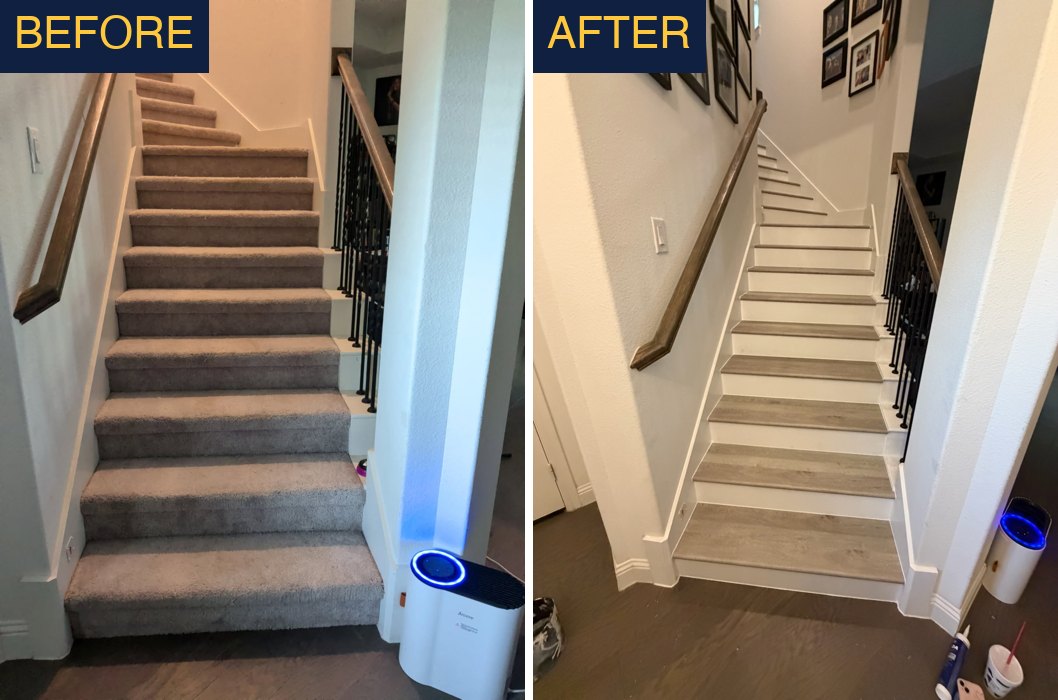
| Staircase, carpet to LVP | from $5,100 | Treads, risers and landing, plus carpet demo and dump fee |
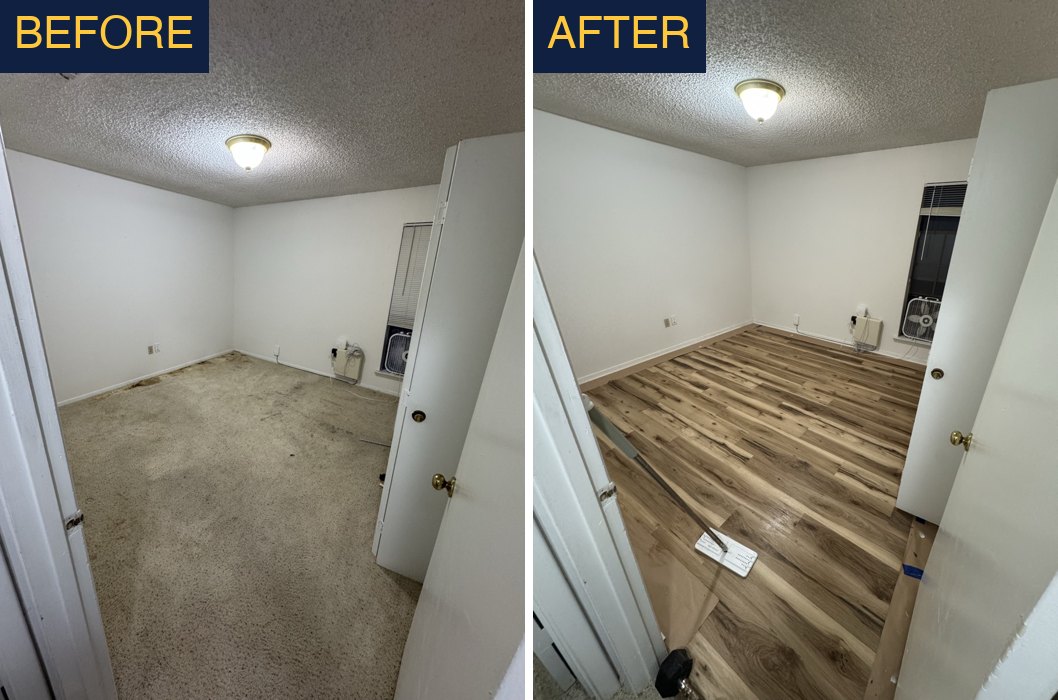
| Carpet remove and replace | from $3,550 | Tear out, haul off, pad and new carpet |
Stairs are the most labor dense flooring work in a house. Every tread and riser is cut individually, and the nosing has to be wrapped cleanly, which is why a staircase can cost as much as a whole bedroom floor.
The Cost Nobody Quotes: What Is Under the Old Floor
The honest answer to "how much will my floors cost" is that nobody knows for certain until the old floor comes up. Carpet hides a lot. Under a torn out floor we routinely find soft or rotted subfloor near dishwashers, refrigerators and exterior doors, old adhesive that has to come off before anything new goes down, and slabs that are out of level enough that click lock plank would separate within a year.
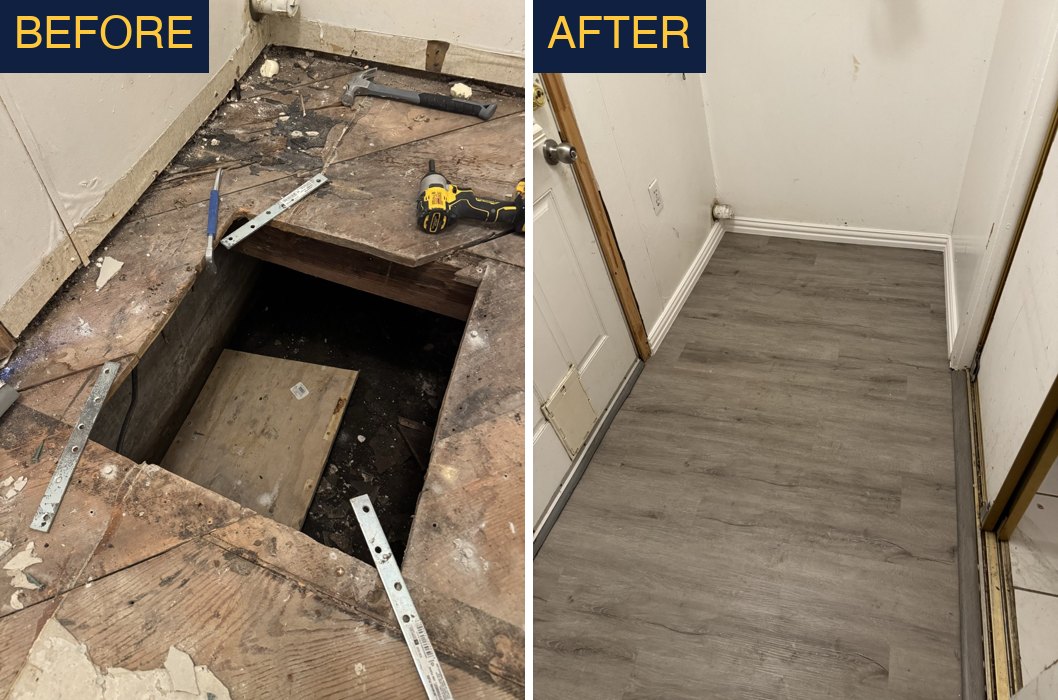
A bid that does not mention the subfloor is not a cheaper bid. It is the same bid with the risk moved onto you as a change order later. Ask any flooring contractor what happens if the subfloor is bad, and get the answer in writing before you sign.
Why Flat Matters More in North Texas
North Texas clay swells when it rains and shrinks when it dries, and slabs move with it. Flooring manufacturers specify a flatness tolerance, commonly something like three sixteenths of an inch over ten feet, and most DFW slabs that have been through a few summers do not meet it without help.
That is why leveling comes before installation on nearly every job we do here. Skip it and you get the three failures every DFW homeowner recognizes: planks that separate and show gaps at the seams, a hollow click underfoot where the floor bridges a low spot, and locking edges that eventually chip because the plank is flexing with every step.
This is also the real argument for luxury vinyl plank over hardwood in this climate. LVP is dimensionally stable through humidity swings, where solid hardwood cups in a wet spring and gaps in a dry August. Hardwood still belongs in formal rooms of higher end homes, and it is the only floor you can sand and refinish rather than replace. It just demands a more stable substrate and a homeowner who keeps the humidity reasonably steady.
Room by Room, What We Actually Recommend
- Kitchen, entry, family room: waterproof LVP. It takes spills, dog nails and traffic, and it is the most forgiving choice over a slab that moves.
- Bathrooms and laundry: porcelain or ceramic tile. Standing water is a question of when, not if.
- Bedrooms: carpet still wins on comfort and cost, and water is rarely the risk it is elsewhere.
- Stairs: LVP treads look sharp and clean up easily, but price it knowing the labor is per piece.
- Formal dining and studies: hardwood, where the look and the resale value justify the extra care.
Questions Worth Asking Any Flooring Bid
- Is tear out and disposal included, or billed separately?
- What happens, and what does it cost, if the subfloor is damaged?
- Is slab leveling included, and to what tolerance?
- Who moves the furniture and the appliances?
- Are transitions, baseboard removal and quarter round in the price?
Two bids that look thousands apart are usually answering those five questions differently rather than quoting different floors.
Frequently Asked Questions
What is the most popular flooring in DFW right now?
Waterproof luxury vinyl plank (LVP). It looks like hardwood, survives kids and pets, and costs less than real wood, which is why it's on most of the homes we floor.
Is LVP or laminate better for DFW homes?
LVP, in most cases. Both are wood-look and budget-friendly, but LVP is fully waterproof while laminate can swell if water sits on it, a real advantage in Texas homes with kids and pets.
Can you mix flooring types in one house?
Yes, and we recommend it: LVP or hardwood in living areas, tile in wet rooms, carpet in bedrooms. We match transitions cleanly so it looks intentional, not patchworked.
How much does it cost to replace carpet with LVP on stairs?
A full staircase conversion on a recent North DFW job started from $5,100, covering treads, risers and the landing plus carpet demo and the dump fee. Stairs are priced per piece because every tread and riser is cut individually.
Does my slab need leveling before new floors?
Usually, in North Texas. Manufacturers specify a flatness tolerance and most DFW slabs that have been through a few summers do not meet it. Skipping leveling is why plank floors separate at the seams and sound hollow underfoot.
Is LVP or hardwood better for a Texas house?
LVP for most of the house, because it stays dimensionally stable through humidity swings that make solid hardwood cup in spring and gap in August. Hardwood is still the better choice in formal rooms, and it is the only floor you can refinish instead of replace.
What if there is damage under my old floor?
It happens often, especially near dishwashers, refrigerators and exterior doors. Get the answer in writing before you sign: a good bid states what subfloor repair costs if it is needed rather than pretending the question will not come up.
Ready for New Floors in DFW?
Free measure and a firm per-square-foot quote. Fully insured & bonded. Rated 5.0 on Google.
Call (469) 617-5235